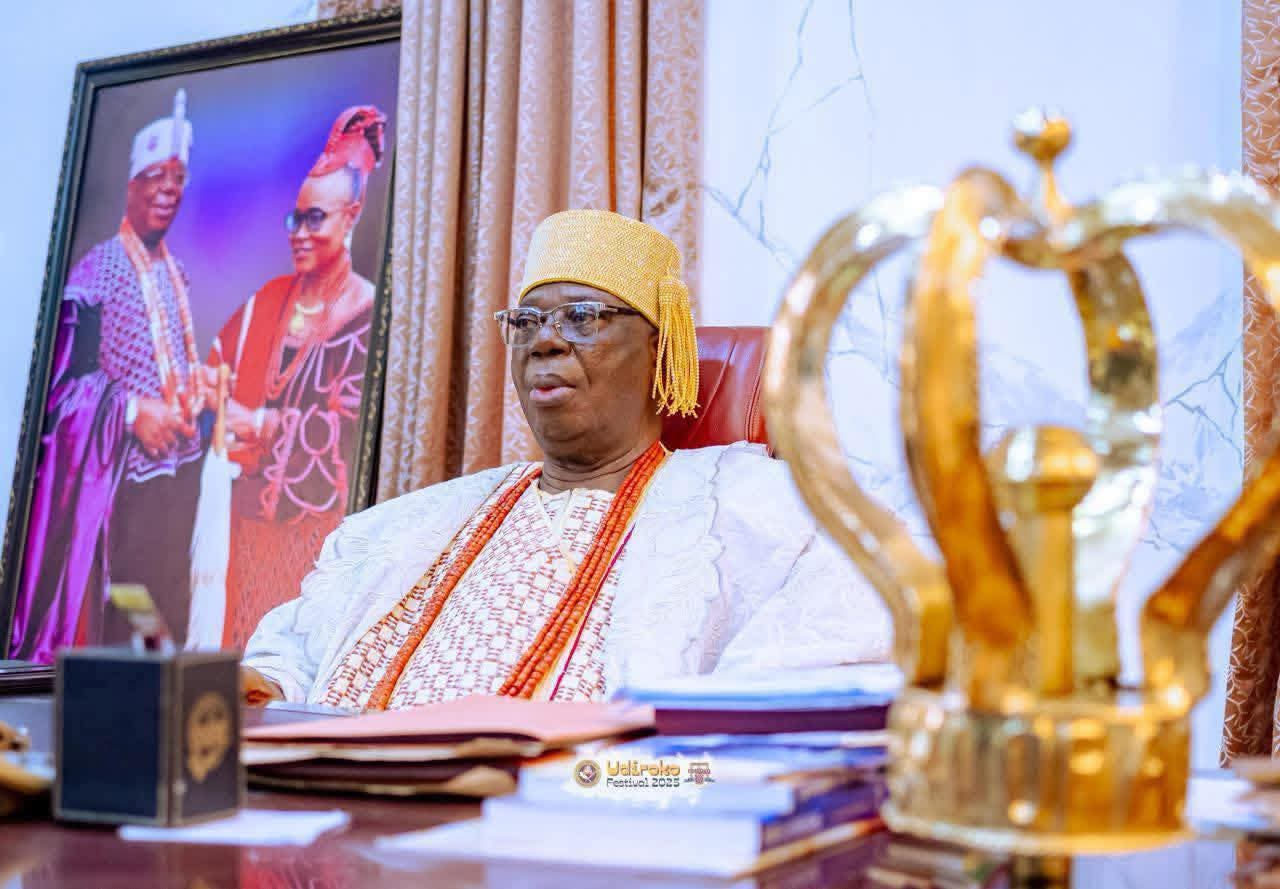
“During the present Ewi’s reign, Ado-Ekiti has grown beyond a mere city. It is now a conurbation, a state capital, an ever expanding nodal settlement, the Central Business District of Ekiti; a cosmopolitan metropolis and the melting point of Ekiti”
THE EWI WE KNOW AND CHERISH
Human societies world-wide have evolved over the years with the attendant paradigm changes and the dictates of each stage of such evolution.
The developments of each stage are dictated by its challenges and complexities of human relations, demands, asymmetrical missions and visions as well as willing co-operations and commitment to the holistic existence of the people as a collective.
These are usually the analytical foundations, yardsticks or barometers for the requisite pronouncements and/or comparative analysis of each stage of the societal evolutionary trends and developments. Anything outside of these parameters always result in armchair analysis, critiques and obvious fallacies which, in most cases, are antithetical to the peace and development of any society or human collective subjected to such myopic conjectures or analytical myopia.
Ado-Ekiti is not an exception to such societal evolution since 1200AD. As a matter of fact, the history of Ado-Ekiti, Ewi’s Throne and Dynasty has been that of continuous evolutions and developments with each stage having its existential challenges and complexities determined by the imperatives of its time.

A BRIEF EXCURSION INTO THE HISTORY OF ADO-EKITI AND THE PLACE OF THE INCUMBENT EWI WE KNOW IN THE SCHEME OF THINGS
The history, culture, and traditions of Ado-Ekiti as the community of all Ado people are intimately intertwined and inseparably connected with the Ewi’s Throne and Dynasty and their deep-seated pedigree. This explains why any documental on the ancient Ado Kingdom and its sub-units automatically starts and ends with the Ewi’s Dynasty and, its pre-eminent paramountcy and dominion over Ado, its territories, and people.
The genealogy of Ado-Ekiti as a collective took its roots from the exodus and/or migration of the sixteen Princes of Oduduwa (including Ewi Biritiokun) from the cradle of the Yoruba race, Ile-Ife, to respectively establish their own Kingdoms and, from the conquest of Ulesun and establishment of Ado-Ekiti by one of the offsprings – [Ewi Awamaro] – of Ewi Biritiokun.
Put more concretely, “Ewi’s ancestors were among the 1st generation of Princes that dispersed from the source and cradle of the Yoruba race into the Yoruba country-side to establish kingdoms of their own” thus, “a milestone of the history of Ado-Ekiti is the episode of the dynastic ancestor of Ewi, named Biritiokun”, the first Ewi who was a historic personage listed among the leading sixteen children of the House of Oduduwa, the eponymous ancestor/culture hero of the Yoruba. Prince Biritiokun was depicted as an orator and on account of his oratory prowess; he was appointed spokesman of his colleagues and kindred who fondly nicknamed him Ewi or Elewi. Biritiokun adopted the nickname as his title as a few of his peers took nicknames that met their fancies.
At the onset, Ewi Biritiokun (Ewi Apa) and Oranmiyan (Odede) the first Oba of Benin departed Ile-Ife together in 1200AD from the House of Oduduwa. Following their arrival at Benin, they both settled side by side, but subsequently parted ways after many years due to the strained relations between the two groups, the causes of which need no further attention here as they have been variously documented and historically archived and, most especially based on the metaphysical prediction of Ewi’s Metaphysician/Spiritualist-Elepeyegunbe that “Ewi and his people would leave Utamodi for a permanent place which he would show them”.

Legend has it that Ewi was one of the sixteen direct Sons of Oduduwa. He was loved by Oduduwa to the extent that he was always kept with him. He was made his spokesman.
It is said that there used to be meetings of the sons of Oduduwa. The Ewi always interpreted the wishes of Oduduwa to the other children and made public any decision taken at these meetings and none of the other children must say anything in public. Moreover, Ewi was endowed with a gift of fine oratory. Hence, his title, Ewi originally “Elewi (The Speaker).
The foregoing attributes of the Ewi which made him more prominent among his fellow Princes of Oduduwa – (and, which in addition to Ifa divination that is now a common knowledge in the whole of Yorubaland and in the Diaspora that “whatever Ewi says on earth is accepted in the heavens” informed his cognomen of “UN UN K’EWI AIYE BA TI WI OUN L’EGBA ORUN II GBA” meaning that “whatever the earthly Ewi decrees is automatically accepted in the greater beyond” and that “whatever Ewi says shall surely come to pass”) – have been variously documented and reinforced by foremost historians and scholars of repute.
Following the conquest of Ulesun by Ewi Awamaro, the “Ewi, and his followers, “conquered the sub-towns and villages under Ulesun one after the other including Isinla, Ilamoji, Oke-Efon, Aso, Asinegbo, Ulero, Ulegemo, Isao, Agbaun (Igbemo) and Ukere”, Ogbunrunmundun (Ayeyemoloja), Owu, Okete, Inikun, Ujamoro, Utalaoro. The Ewi and his followers established their sway by subsequently extending Ado’s “dominion over the adjoining districts by posting princes to establish new settlements of their own there. Such communities include Ioroko, Uyin, Igede, Otin, Eka, Ilamuo, Obo (now Araromi Obo-Ekiti), Afao, Odo, Are, Esure, Ioropora, Eminrin, Ugbo Omo-Oba etc”.
The Paramountcy of the Ewi of Ado-Ekiti over Ado Kingdom and Chiefdom is unquestionable in all aspects of the traditional, historical, cultural and political systemic existence of the town and its people. This claim is deeply rooted in the history of Ado-Ekiti and its establishment by conquest in 1300AD. It is also rooted in the fact that all the aboriginal people who by Ewi’s willingness and mercy survived the Ewi Awamaro’s onslaught pledged their loyalty and obedience to his supremacy and well established political hegemony. This explains why the “Ewi (is) the personification of the most cherished institution of Ado people, the embodiment of Ado history, culture and character in all their ramifications”. Without any equivocation, the Ewi has long remained “the source of today’s Ado-Ekiti” hence, its history “must start from the Ewi who is regarded as the unquestionable founder of Ado-Ewi (now Ado-Ekiti) just as the history of Yoruba will start from Oduduwa”.

Thus, his paramountcy clearly informed why “Ado people generally credit their Oba with near-mythical powers of sound judgment and infallibility. saying: ‘Un u k’Ewi aye ba wi l’egba orun i gba” (trans) ‘whatever Ewi pronounces the lords of cosmos accepts”. This equally explains the core of one of the numerous panegyrics of Ewi that “T’Ewi se” and T’Ewi laa se” meaning “whatever Ewi says, or desires is the final pronouncement and shall always be the case without any question or equivocation”. This paramountcy which has been variously documented and archived is clearly dictated by the nature of Ado-Ewi’s (Ado-Ekiti) foundation as a kingdom. This amongst others informed the age-long status and expanse of Ado-Ekiti’s territory to the extent that as the metropolis of Ado Kingdom, it was the largest in Ekiti. Ado traditions assert that at its apogee; say, about the 18th century (1700-1799), the kingdom comprised a hundred and fifty erstwhile satellite communities covering (located in) present-day entire Ado-Ekiti Local Government Area, all of Irepodun and Ifelodun Local Government Area, Gboyin
Local Government Area, much of Ekiti Southwest Local Government Area and parts of Ido-Osi Local Government Area. The inhabitants of Ado-Ekiti, Ifelodun-Irepodun Local Government Areas were entirely Ado proper, and their metropolis was Ule Ado, or Ado-Ewi or Ado-Ekiti.
There are so many festivals in Ado-Ekiti like Iwemo, Ogun, Aeregbe, and Oitado while Udiroko is the most prominent festival due to its significance to the systemic existence and cultural heritage of Ado-Ekiti people as a collective. This brief excursion into the history of Ado-Ekiti from its inception clearly shows the deep-seated historical pedigree of the community of all Ado people. It has particularly choreographed its establishment through conquest following the rampaging onslaught of the third Ewi – Awamaro in 1300AD (14th Century). Since this time, and particularly since the creation of Ekiti State in 1996, Ado-Ekiti has witnessed constant growth and development both of which had transcended one historical paradigm to another up to this period of its status of a Metropolis and the Capital of Ekiti State. By this, Ado-Ekiti Community is now a home to all the people of Ekiti State and other Nigerians as well as people from other nations all over the world.
It is discernible from the brief history of Ado-Ekiti that the town was ruled by 27 Ewis right from the first Ewi, Elewi Biritiokun in 1200AD before the incumbent Ewi, Alayeluwa Oba (Dr.) Rufus Adeyemo Adejugbe Aladesanmi III [CON. JP.], who ascended the throne of his forefathers in December 1990 as the 28th Ewi of Ado-Ekiti. Since ascending the Throne, Oba Adejugbe Aladesanmi III has presided over the affairs of Ado Kingdom like a colossus with attendant innumerable achievements, impeccable monumental developments, modernisation of the traditional architecture in line with the requisite hallmarks of sociocultural evolution and paradigm shifts without sacrificing its deep-seated cultural pedigree and potency.

THE NATURE AND SCOPE OF ADO-EKITI INHERITED BY THE INCUMBENT EWI IN 1990 WHEN HE ASCENDED THE THRONE
Without begging the issues, the incumbent Ewi we know ascended the throne in 1990 with a sinking if not already sunk and divided Ado Kingdom. In other words, he inherited a fragile collective due to the then existing crippling chieftaincy contestation. As a matter of fact, one of the fallouts of the chieftaincy dispute was the legal battle instituted against his immediate predecessor by one arm of the two Ruling Houses of the Ewi Dynasty in Ado-Ekiti.
Had he not succeeded in the prosecution of that case and its implication for the rotational principle or order, his selection would have been in fatal jeopardy. Not minding the trauma associated with his existence as a new Oba at that period of time, the Ewi we know for what we can now explain within the prism of the divinity of his ascension to the throne was able to successfully navigate the slippery terrains and contours of the divided Kingdom at that period of time to restore peace and stability in Ado-Ekiti Kingdom.
The Kabiyesi, the 28th Ewi we know was able to survive the challenges of the divided Kingdom he ascended due to his attributes: humility, elegance, humane royalty, royal finesse excellence on the throne, patience, tolerance, listening ability and accommodating value.a These attributes formed the foundation of his impeccable achievements and widely acknowledged traditional leadership.
In the course of his reign from 1990 to date, the Kabiyesi, Ewi we know has repeatedly brought these attributes in addition to his forward looking qualities to bear in his dealings with the people known and unknown worldwide.

The way this Kabiyesi started his reign in 1990 shows that he was destined for the throne and impeccable royal performance and prominence in the comity of Obas within and outside Nigeria.
In dousing the tension that griped the systemic existence of Ado people prior to his ascension of the throne, Kabiyesi Ewi Aladesanmi the III embarked on the following positive commitments amongst other things:
* Reviewing the various controversies and exploring ways of resolving them.
* Restructuring of the leadership arrangements in the town.
* Information dissemination through regular township meetings and effective committee system.
* Maintenance of old structures put in place by his predecessors on the Throne and, adding of new ones without eclipsing or disregarding the recognition of those of the predecessors.
* Finding the means of enhancing the position of Ado-Ekiti so as to be able to take her rightful place among the frontline towns in Nigeria in ways amenable to meaningful partaking in National affairs.
* Initiation of discussions with distinguished Ekiti Sons and Daughters on how to orientate the people towards the liberation of our people in Ekiti and getting them out of the woods.
* Encouraging mutually beneficial attitudes among all Ekiti indigenes through which they should/would behave as members of the same family with one goal – development of Ekiti for the present and future generations.
* Solicitation of co-operative attitudes and relationship with the government and commitment to propping up other people for futuristic mutual development, growth and benefit for Ekiti State, Nigeria and the people.
A combination of the foregoing actually laid the chassis of the Ewi’s reign and Royal comportment up to this moment. Concretely, he has repeatedly brought these kingly traits which accompanied him to the Throne to bear everywhere he has been chosen to act and lead starting from his domain, Ado-Ekiti where he has constantly used and relied on the Committee system of Administration.
Concretely stated, the Kabiyesi Ewi we know believes in the Committee system of governance and administration. He continues to use this system for policy initiation, formulation, implementation and evaluation thus various committees have been used and continue to be put in place in Ado-Ekiti by His Imperial Majesty in these regards. Currently in Ado-Ekiti, to name a few, the under-listed Committees consisting of reputable true Sons and Daughters of Ado-Ekiti and, critical Stakeholders at home and in the Diaspora in Ado-Ekiti Project as members exist vis-a-vis the past, current and possible issues affecting or that may likely affect our noble city-Ado-Ekiti in future:
• Ado-Ekiti Traditional Advisory Committee
• Udiroko Committee
• Ado city Trustees Committee
• Ado Consultative Committee.
• Palace Maintenance Committee
• Market Management Committee
• Population Census Committee
• Palace Courts Committee
• Land Matters Committee
• Health & Environmental Committee
• Welfare Committee
• Life Insurance Committee
• Community Mobilisation Committee and various Adhoc Committees from time to time depending on the exigencies of the situations.
• Utilities (Electricity, Water) Committee
• Ado-Ekiti Fund Raising/Finance Committee
Security Committee etc.
With this practice, many laudable projects have been initiated and completed through open and transparent administration. In addition various issues capable of causing social problems and breakdown of law and order have been responsively resolved.
By so doing, Ado-Ekiti continues to exist and develop in peace in spite of today’s challenges and dilemmas of Metropolitan Cities in Nigeria of which Ado-Ekiti is one.
The public assessment and evaluation of the Ewi we know has been positive in all ramifications. For our purpose, we found one of such assessments worthy of citation as follows:
Of all the Ewis that had ever ruled in Ado-Ekiti, the present Ewi has a wonderful record of achievements which may be too difficult to beat for a long time….During the present Ewi’s reign, Ado-Ekiti has grown beyond a mere city. It is now a conurbation, a state capital, an ever expanding nodal settlement, the Central Business District (C.B.D) of Ekiti; a cosmopolitan metropolis and the melting point of Ekiti. With an unparalleled diplomacy, supreme courage and political maturity, Kabiesi [sic], Oba Adejugbe Aladesanmi III used his traditional position to resuscitate, in Ado-Ekiti, what looked like the historical conference of Ekiti Obas (Pelupelu). He presided over series of meetings of Ekiti Obas for the purpose of creating Ekiti State. He spent his time, money and efforts for that purpose. He had many sleepless nights as he oscillated tirelessly between Ado-Ekiti and Abuja. He almost became the Ewi of Abuja just to have Ekiti State created …. Undoubtedly, the greatest achievement of the present Ewi, so far, is composed of the indefatigable efforts he made singly and collectively to successfully ensure the creation of Ekiti State with Ado-Ekiti as its Capital (Akande 1992, Udiroko Publication Series 2019).
It should be emphasized at this point that the constancy of uprightness, honesty and solidity of character of the incumbent of Ewi which he brought to the throne as the 28th Ewi of Ado-Ekiti remained undiluted over the years. This remains so in spite of the challenges, complexities, trappings and robustness of the Royal Throne.
The impeccable attributes of our Kabiyesi which are beyond any reproach have earned him various awards locally, nationally and globally all of which are concretely identifiable.
On a general note, the Ewi we know without meaning to take away the achievements of his predecessors or demean their status or stature while on the throne, has surpassed the 27 Ewis before him in all ramifications given the growth and developments of Ado-Ekiti and its indigenes as well as the place of Ado-Ekiti Kingdom today amidst the comity of cities and Kingdoms.
Alayeluwa Oba Adeyemo Adejugbe Aladesanmi III, Eletiko, Odundun Oba Asoludero. Igba yin a tu wa lara. Yoo ro ekele, yoo ro igboro ilu, yoo ro oko, you ro aya, Omo Ado o, t’Ewi l’aase.
Ewi pele omo amegberin eko segun
Ewi pele omo a r’egberin akara sete
Ewi pele omo aregberin oke owo na.
Kekere Ado o
Tewi laa se
Agbalagba Ado Tewi laa se (Elebuibon 2017).
Elewi, Ewi Ule Ado, Ewi Otu, Ekun Obarisha, Ajalaiye Odio, Olokunaye, Okun Arabaribi. T’Oba laase. Aase.
SIGNED
1. High Chief Festus O. Abegunde, the Odogun of Ado-Ekiti
2. High Chief F.S.O. Alabi, the Odofin of Ado-Ekiti
3. High Chief Olatunji Obayemi, the Alarinerin of Ado-Ekiti.
4. Chief Justus B. Foluso, the Ologunsinkin of Ado-Ekiti..
5. Chief P.O. Ajayi, the Oisa of Ado-Ekiti
6. Chief Akintoye Akinyemi, the Balemo of Ado-Ekiti.
7. Chief Opeyemi Abiola, the Omosio of Ado-Ekiti.
8. Chief Oluwatoyin Akinyemi, the Barafon of Ado-Ekiti
9. Chief (Mrs). Bolanle Aderoju, the Eyegba of Ado-Ekiti